
In this article I am going to discuss the concept of wheel and tyre combinations such that you can see how to resize a wheel and tyre and still keep within the same rolling diameter. Remember, the odometer in your dashboard is calibrated to a specific wheel and tyre, so if you go over or undersize it will affect the speed reading – which could become costly if you think you are doing 40 when in fact you are doing 60!
To make it difficult, wheels are measured in inches and tyres are measured in both millimetres and inches! You also have to take the aspect ratio of the tyre into consideration as well! The aspect ratio is the ratio of tyre width multiplied by the section height. The section height is the amount of rubber between the road and the rim of the wheel. With this information, it is now possible to determine what is known in the trade as “Plus Sizing” – where a larger (and possibly wider) rim is used with a lower profile tyre to match the original rolling diameter. If the rolling diameter is a lot different from the original, then the odometer will need to be re-calibrated to suit the new size.
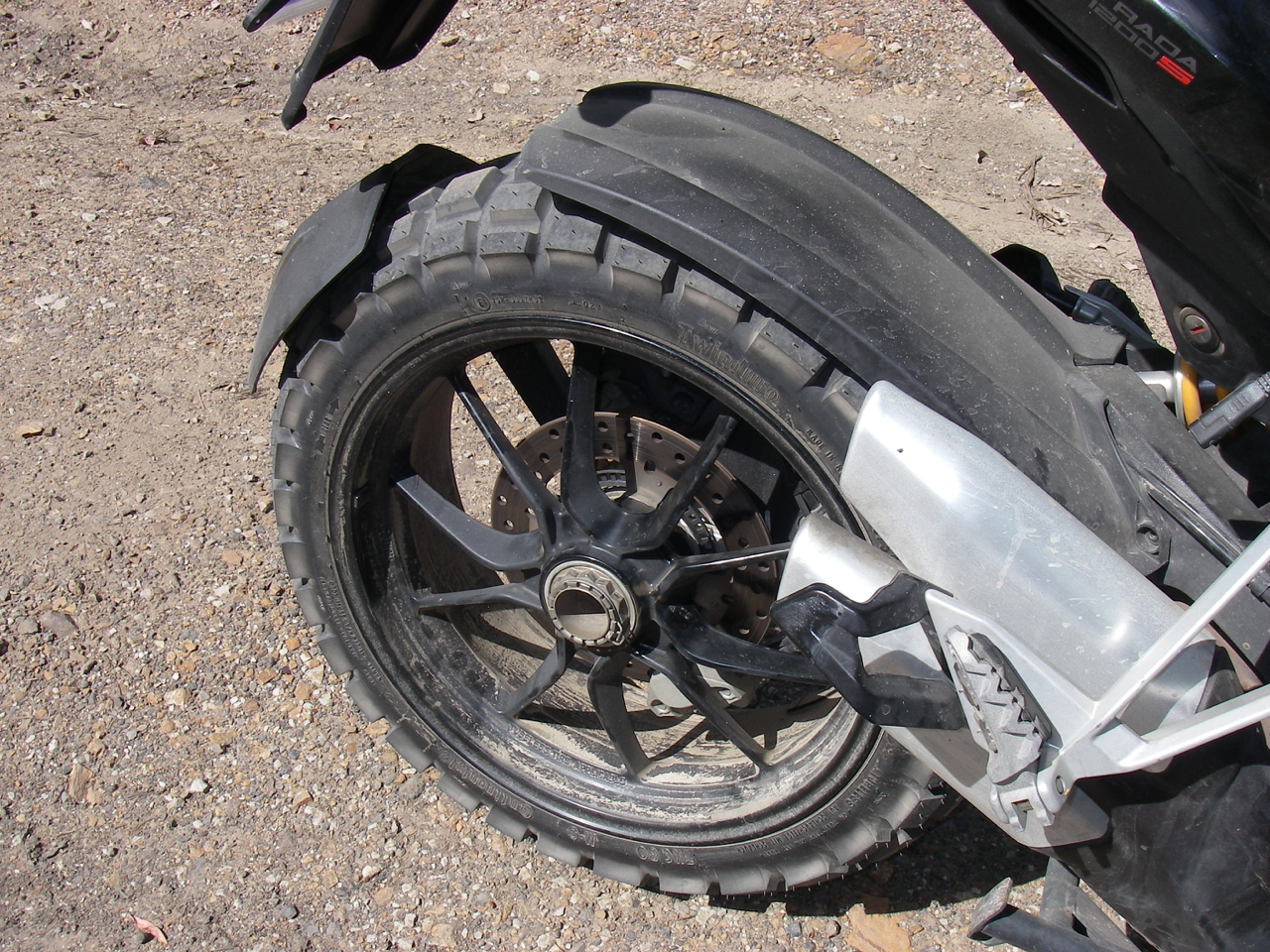
So to work out what the actual size is, you can convert the tyre diameter from millimetres to inches and then start to plan what would be better suited to your car. We’ll use an example of a tyre with the rating of 225/50 R16 92W – the standard rear tyre for my old Honda. Firstly we’ll ignore the speed rating of 92W, this will be used when matching a new tyre compound.
Next we take the width (225) and multiply this by the aspect ratio (often called the “profile”) of 0.5 – the 50 as it is expressed in a percentage form. This gives us 112.5mm, now divide this by 25.4 (there are 25.4mm per 1 inch) to give 4.42 inches. This is the section height. Multiply by 2 and add in the rim size (being 16) and we have a rolling diameter of 24.84 inches.
Now assume that we want to increase the wheel size to an 18 inch rim. What would be the closest tyre size, knowing that we might not get the explicit size but will be close enough for us not to worry about speed traps and cameras!
To start let’s subtract 18 from 24.84 (the original rolling diameter) to give 6.84 inches. Then divide this by 2 to give the section height in inches which is 3.42 and when converted back is equal to 86.86mm. Now we need to divide 86.86 by 225 (the width) to give us the aspect ratio (profile) which is 0.386, rounding up gives us 0.4 (or 40). We now know that we should be looking for a 225/40 R18 tyre. This will give you a marginally slower odometer reading but probably not enough to get you into trouble.
Some owners also look at adding wider tyres at the same time. Be careful doing this as some outlets and web sites describe the optimal width for the aspect ratio and you can end up with a rolling diameter up to an inch bigger that will affect your odometer reading! Also don’t forget about the amount of under body space needed to deal with the extra width of rubber – you could find that you damage the tyre due to tyre/body contact. Another factor is the state of your suspension, if it is too soft you will damage the tyre as the body meets the tyre when braking or cornering.
The final consideration for wider tyres and rims is the extra strain it may put on the wheel hub or drivetrain which could give you some interesting times in the wet or worse, part company with the rest of the vehicle when it’s had enough.


Leave Motoring Weekly a comment! Your views are very welcome.